Prisma Postgres

Instant Serverless Postgres
Prisma Postgres is a developer-friendly, serverless database built for high-performance, fullstack applications. Leveraging a unikernel-based architecture on bare metal servers, it delivers fast queries, seamless scaling, all without cold starts—perfect for serverless and edge.
Prisma Postgres offers a unique set of features and benefits:
- Designed for serverless & edge applications
- Built-in global caching
- Scalable connection pooling
- Zero cold starts
- Generous free tier
- Visual data management
- AI-powered performance tips
- Lightweight & type-safe database client
Whether you’re building high-traffic, production apps or quick prototypes, Prisma Postgres offers the flexibility, speed, and scalability you need.
Next.js
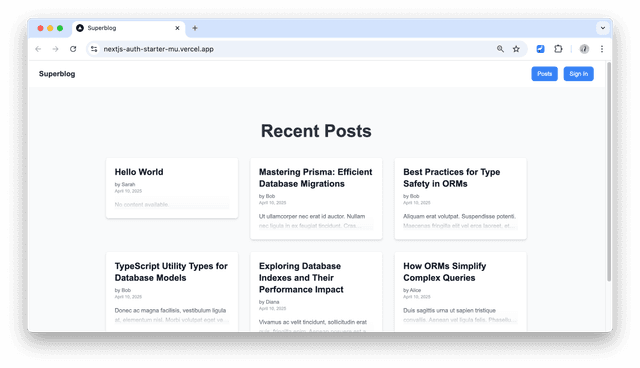
Use create-next-app to create a Next.js CRUD demo with Prisma Postgres using the official Next.js example with Prisma Postgres, navigate into the project directory and install dependencies:
npx create-next-app@latest --template prisma-postgres my-prisma-postgres-appcd my-prisma-postgres-appnpm installConnect the my-prisma-postgres-app application on your local machine with a project in your Vercel team by running the following command:
vercel linkNow you can pull the DATABASE_URL environment variable from Vercel like so:
vercel env pull .env.development.localThis will update your local .env file and configure your database connection to this Prisma Postgres instance.
Create the database schema in your Prisma Postgres instance by running a migration:
npx prisma migrate dev --name initThis will create a local SQL migration file and apply it against your remote database. Now, create some sample data so the UI won’t look empty when you run the app:
npx prisma db seedFinally, you can use the vercel CLI to deploy your application:
vercel deployEnvironment variables
When enabled in your Vercel project, this integration will the set DATABASE_URL environment variable to connect to a Prisma Postgres instance.
Pricing
Prisma Postgres charges per operation, not for fixed compute resources, like most other providers. Whether you're doing reads, writes, simple queries, or complex ones, it all comes with a simple and predictable cost you can reason about and avoid surprise bills at the end of the month. Learn more on our pricing page.
Usage with Prisma ORM
Prisma Postgres currently requires Prisma ORM for database migrations and queries. Support for other ORMs will come soon.
Starter Template