
The world runs on open source software. The frameworks, libraries, and tools we rely on are made possible by communities that share ideas and build in the open.
At Vercel, we want to help those communities thrive. That’s why we run the Vercel Open Source Program: a developer initiative that gives maintainers the resources and support they need to keep shipping and growing their projects.
Four times a year, we welcome a new cohort of open source projects into the program. Maintainers receive $3,600 in Vercel platform credits, a starter pack with credits from third-party services, and guidance from Vercel and the community.
Today, we welcome a new cohort into the program.
Copy link to headingSpring 2026 cohort
Copy link to headingASCII Studio
A browser-based tool that converts video frames in real time into precise ASCII representations using an optimized rendering pipeline. Users can adjust density, contrast, and character sets to produce customized ASCII animations.

Copy link to headingSync UI
A free, open-source React UI library offering 125+ animated components, 13+ pre-built blocks, and 3 premium templates. Built with Material UI and Motion (motion/react), designed for design engineers building landing pages and Next.js projects.


Copy link to headingxmcp
A TypeScript framework for building and deploying MCP (Model Context Protocol) servers, featuring file-system routing, hot reloading, middleware support, and flexible deployment options including zero-config Vercel support.

Copy link to headingComponentry
An open-source collection of animated, interactive React UI components styled with Tailwind CSS and Framer Motion, designed to be copied and pasted into apps rather than installed as a dependency.


Copy link to headingAnimateIcons
A library of 281 animated SVG icons for React, built on motion/react with hover and imperative triggers plus configurable size, color, and duration. It can be installed as an npm package or copied directly via its CLI, shadcn, or MCP server for AI agents.

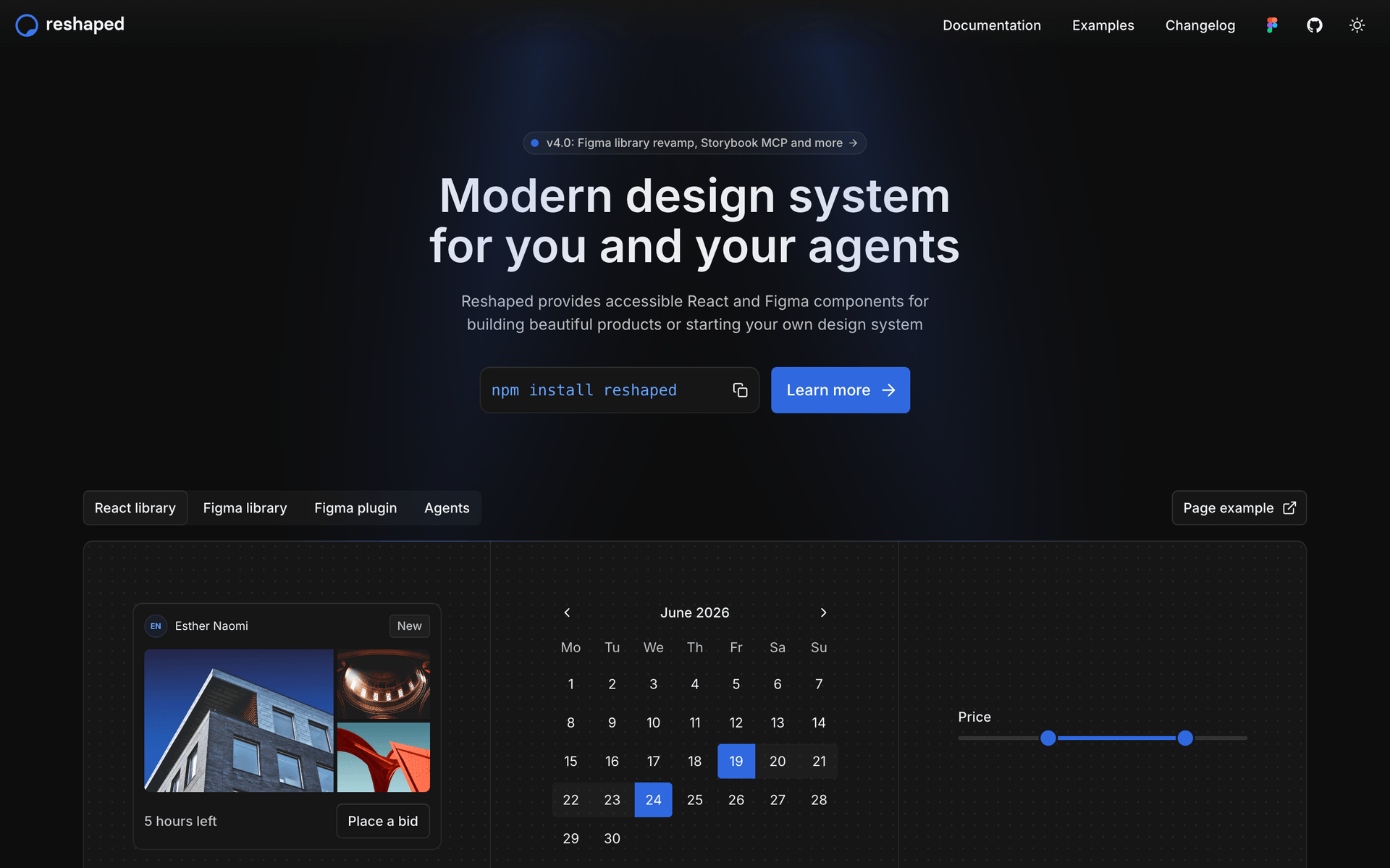
Copy link to headingReshaped
A React component library paired with a matching Figma library, offering professionally crafted components for building beautiful products or starting your own design system. It also includes headless components and framework-agnostic utilities for teams building custom design systems.

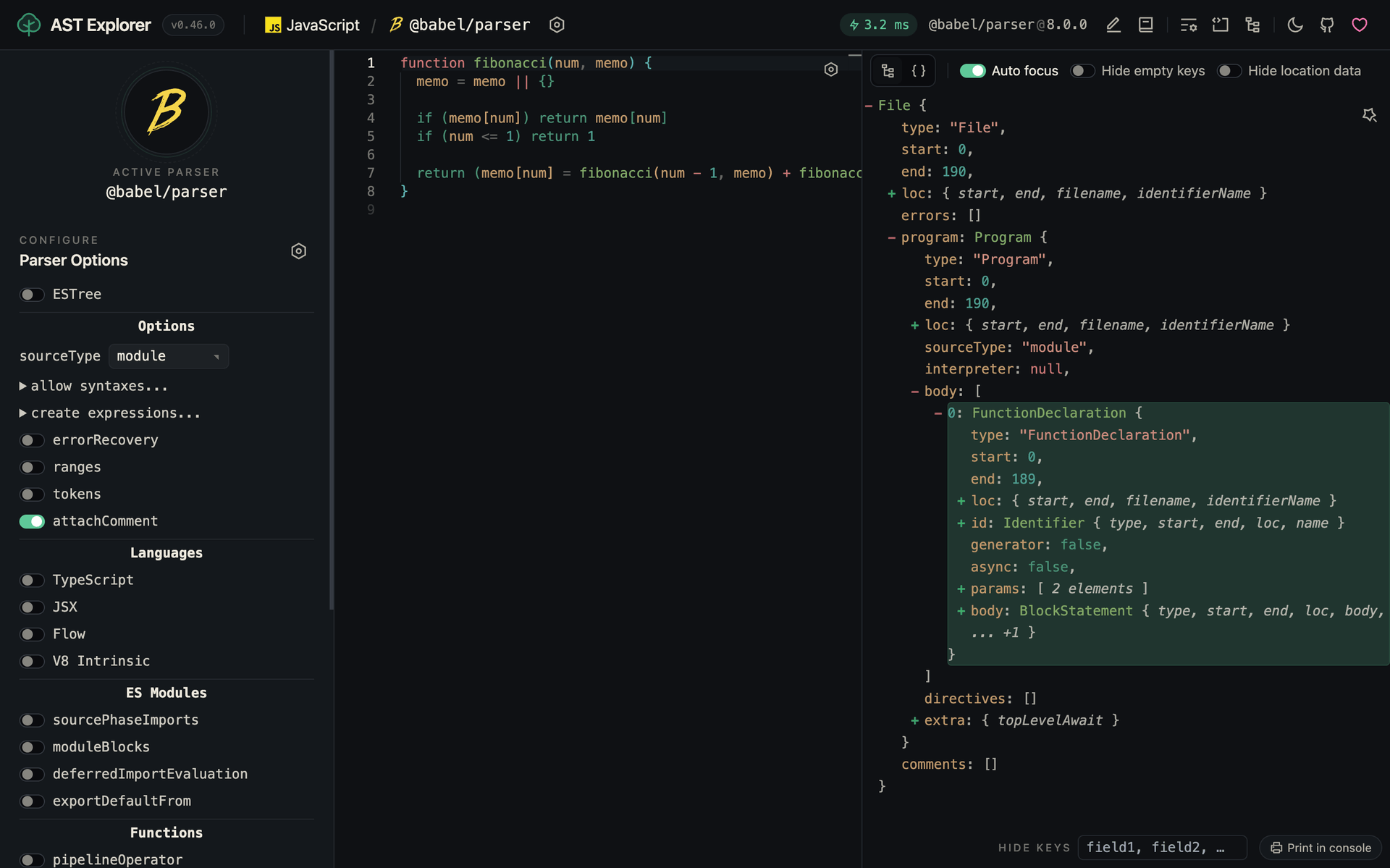
Copy link to headingAST Explorer
A web-based tool for exploring abstract syntax trees produced by various parsers across many different languages, including JavaScript/TypeScript, CSS, HTML, JSON, Markdown, YAML, Rust, and more. It features Monaco Editor integration, URL-based code sharing, customizable parser versions via CDN, and a GUI for setting parser options.

Copy link to headingShieldCN
An open-source badge service that generates README badges rendered as actual shadcn/ui Button components via Satori, serving as a free alternative to shields.io. It supports a wide range of providers (npm, GitHub, Discord, etc.), variants, sizes, icons, animations, and offers a CLI plus self-hosting via Docker.


Copy link to headingSvelte AI Elements
An unofficial SvelteKit port of Vercel AI Elements, built on shadcn-svelte, providing a component registry for AI-native interfaces like chat apps, reasoning UIs, and workflow builders.


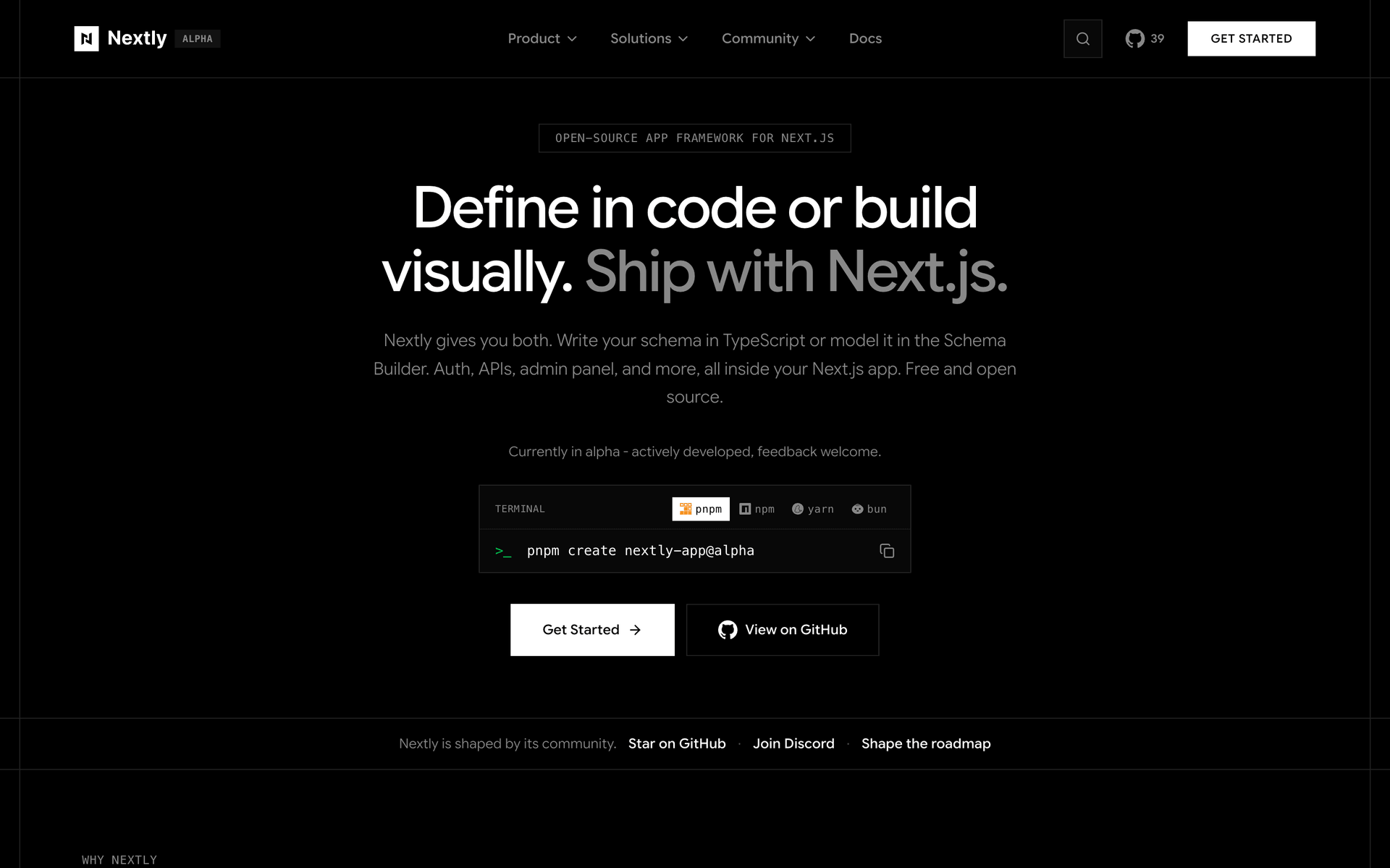
Copy link to headingNextly
An open-source, MIT-licensed, TypeScript-first CMS and app framework for Next.js that lets you define content schemas directly in code or through a visual admin builder. It provides a typed REST and Direct API, a customizable admin dashboard, pluggable database and storage adapters, and built-in features like auth, RBAC, media, and hooks.

Copy link to headingTirith
A Rust-based terminal security tool that intercepts shell commands, pasted content, and files before execution to block threats like homograph URLs, pipe-to-shell attacks, ANSI injection, obfuscated payloads, and malicious AI agent configs. It functions as a pre-execution gate via shell hooks, an MCP server, and a CLI scanner, using 80+ detection rules plus a signed threat intelligence database covering known-malicious packages, IPs, and typosquats.

Copy link to headingbestJavaer
An open-source lab documenting AI-assisted coding workflows, Agent experiments, tool evaluations, and failure cases for Chinese-speaking developers.

Copy link to headingBklit UI
An open-source library of customizable React chart and utility components, distributed as a shadcn registry. It also includes Studio, an interactive playground for tweaking charts and exporting the generated code or registry JSON.


Copy link to headingMultiple Cucumber HTML Reporter
A Node.js module that converts Cucumber JSON output into interactive, customizable HTML reports with features like a dashboard, dark mode, multi-run consolidation, and rich metadata display.


Copy link to headingPayRoutes
A unified open-source TypeScript SDK that simplifies payment processing across different providers with a consistent API.


Copy link to headingArtifact
An open-source, MIT-licensed workspace that helps researchers discover and dive deep into papers using an AI assistant, with support for arXiv, uploaded documents, and website links such as technical blogs.

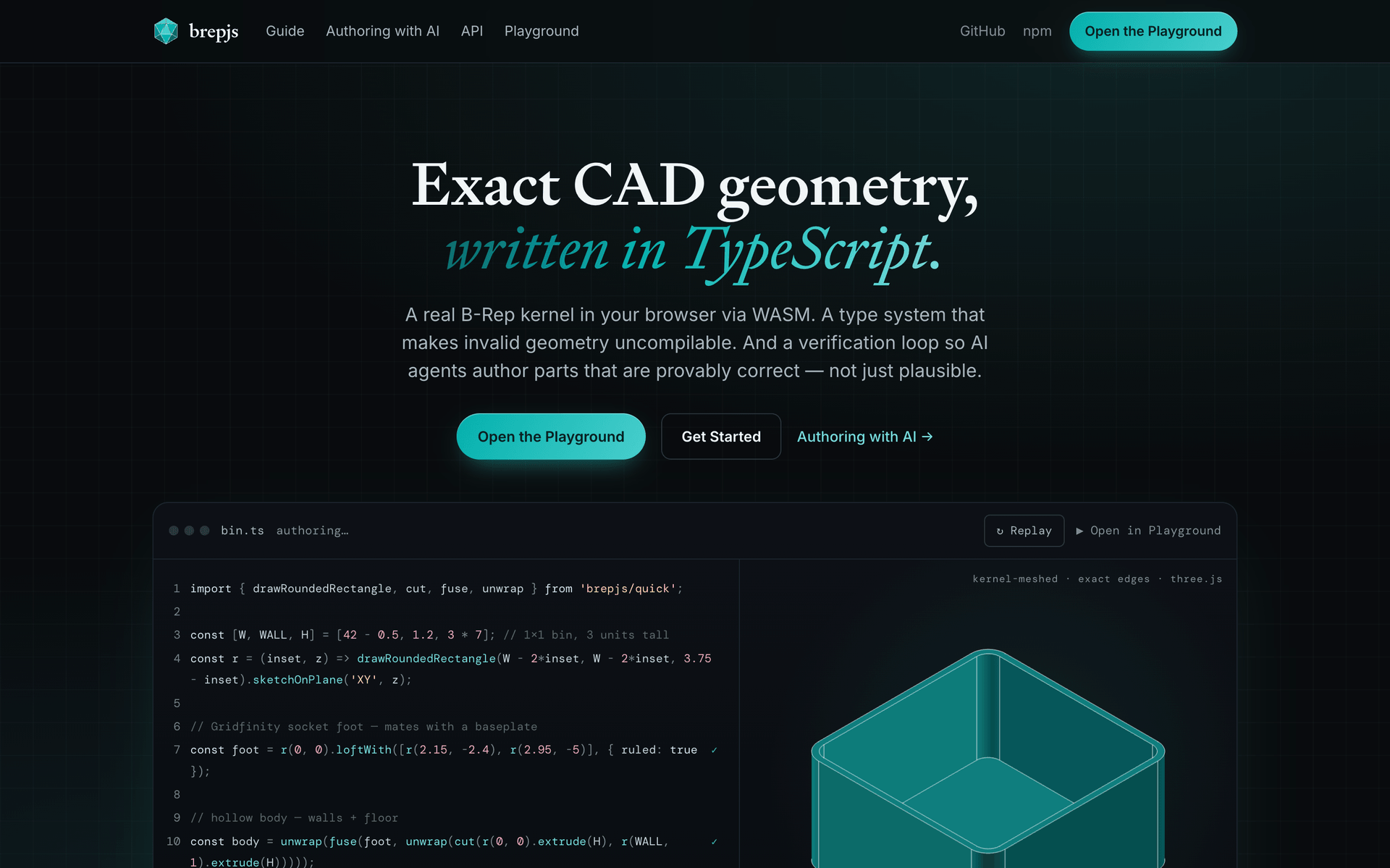
Copy link to headingbrepjs
A TypeScript library for CAD modeling in JavaScript that uses exact B-Rep (boundary representation) geometry rather than triangle meshes, enabling precise booleans, real measurements, and STEP file export. It targets parametric parts like enclosures and brackets, leveraging TypeScript's type system so that if it compiles, the geometry is valid.
Copy link to headingIconiq
A component library offering shadcn/ui primitives you own, paired with subtle motion animations so developers can drop in components, adjust tokens, and ship quickly without boilerplate setup.


Copy link to headingshadcnpreset
An open-source fork of the shadcn/ui monorepo that lets users browse real shadcn/ui presets, preview them live, search in plain English, vote on favorites, and install them via the shadcn CLI. It layers a Next.js app onto the upstream CLI, registry, and customizer so preset pages stay synced with the v4 create experience.


Copy link to headingZoonk
An open-source platform for interactive learning, built primarily with TypeScript and using technologies like Next.js, PostgreSQL, Prisma, and Tailwind CSS.


Copy link to headingopen-slide
A React-based slide framework designed for AI coding agents, where each deck renders to a fixed 1920×1080 canvas and agents generate the slide components from natural language prompts. It includes features like an in-browser inspector for commenting on elements, a presenter mode, an asset manager, and export to static HTML or PDF.


Copy link to headingRallly
An open-source tool for scheduling group meetings by creating simple polls to find the best possible date and time based on each of the participants' availability. Built with Next.js, Prisma, tRPC, and TailwindCSS, it helps users coordinate events without all the lengthy back-and-forth email exchanges.


Copy link to headingNotra
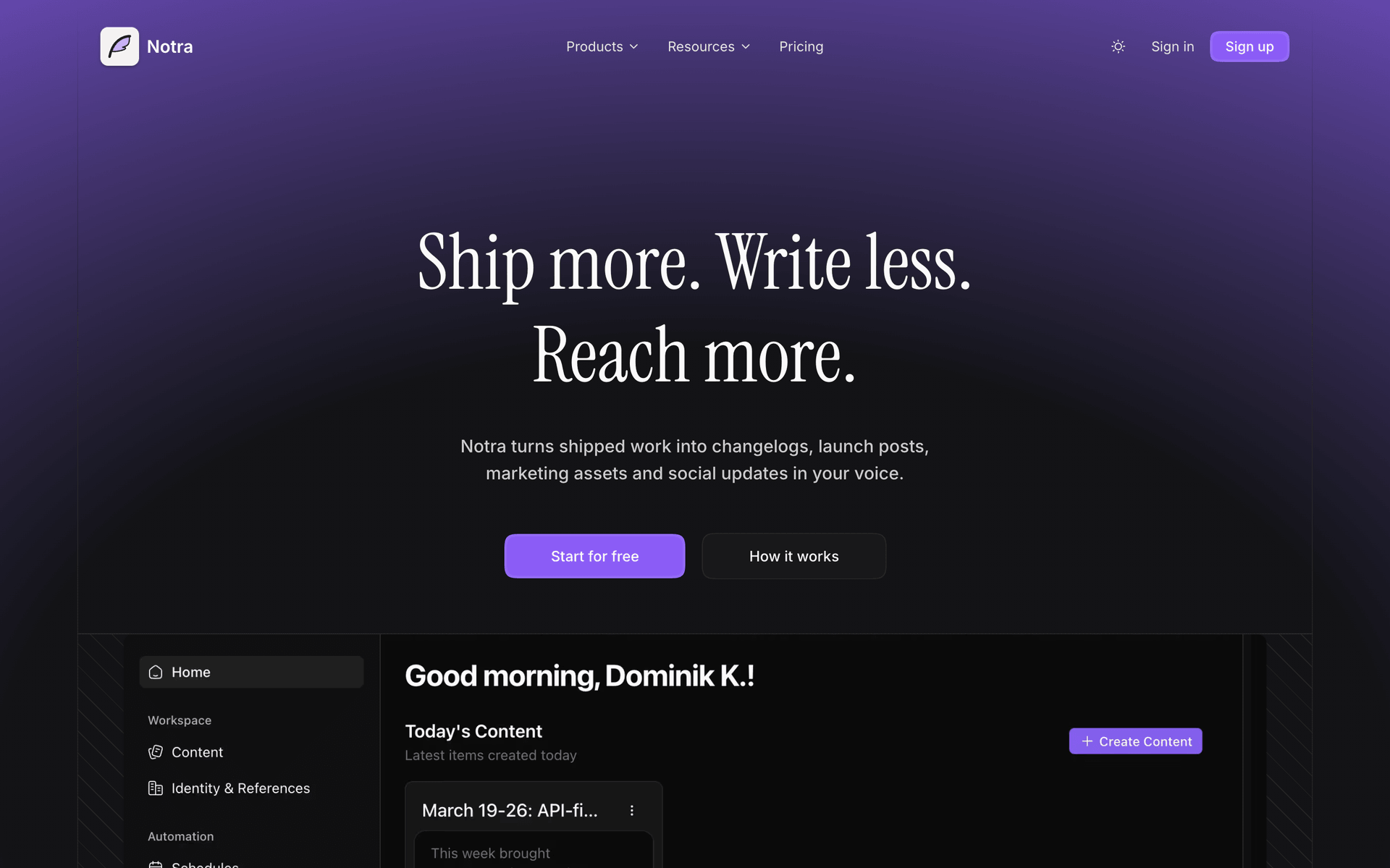
An event-driven platform that connects to tools like GitHub, Linear, and Slack to automatically transform team activity (merged PRs, closed issues, conversations) into ready-to-publish drafts for changelogs, blog posts, and social media, tailored to a team's brand voice.

Copy link to headingtaste-skill
A collection of portable Agent Skills for AI coding tools (Codex, Cursor, Claude Code) designed to improve AI-generated frontend interfaces with better layout, typography, motion, and spacing. It also includes image-generation skills for producing reference boards like web comps, mobile screens, and brand kits that can then be handed off to coding agents for implementation.

Copy link to headingCaracal
A security-first authority and delegation system for AI agents that acts as an authority plane, enabling agents to safely access tools, APIs, and providers through scoped, short-lived, revocable, and fully auditable credentials, all without ever embedding any provider secrets directly in agent code.


Copy link to headingClaude-Mem
A persistent memory compression system for Claude Code (and other agents like Gemini CLI, OpenCode, and Codex) that automatically captures session activity, generates semantic summaries, and injects relevant context into future sessions, seamlessly preserving context across sessions.

Copy link to headingTabularis
An open-source, Apache 2.0-licensed database client supporting PostgreSQL, MySQL/MariaDB, and SQLite, built with React and Rust/Tauri. It features SQL notebooks, visual EXPLAIN, a built-in MCP server for AI agents, and a plugin system that lets developers add support for additional databases in any language.

Copy link to headingMarketing Skills
A collection of AI agent skills for marketing tasks, designed to help technical marketers and founders use AI coding agents for areas like conversion optimization, copywriting, SEO, analytics, and growth engineering. Works with Claude Code, OpenAI Codex, Cursor, Windsurf, and any agent that supports the Agent Skills spec.

Copy link to headingAI Engineering from Scratch
An open-source, MIT-licensed AI engineering curriculum spanning a total of 503 lessons across 20 distinct phases, covering everything from the math foundations all the way to autonomous agents and production deployment. Each lesson has learners build algorithms from scratch first (in Python, TypeScript, Rust, or Julia) before moving on to using production frameworks, shipping a reusable artifact such as a prompt, skill, agent, or MCP server.


Copy link to headingperformative-ui
A satirical npm package providing AI-native React components that signal how oversubscribed your funding round is, distributed via npm with accompanying documentation and live demos.


Copy link to headingThe web runs on open source
Thank you to the spring 2026 cohort of our Open Source Program. We’re looking forward to watching these projects grow and give back to the community.
Want to join the open source program?
Applications open four times a year.
Build with us