

Template name
New Project
Draft content in Slack with house-style skills and Notion sources. Revise in threads and approve new Notion draft pages before creation.
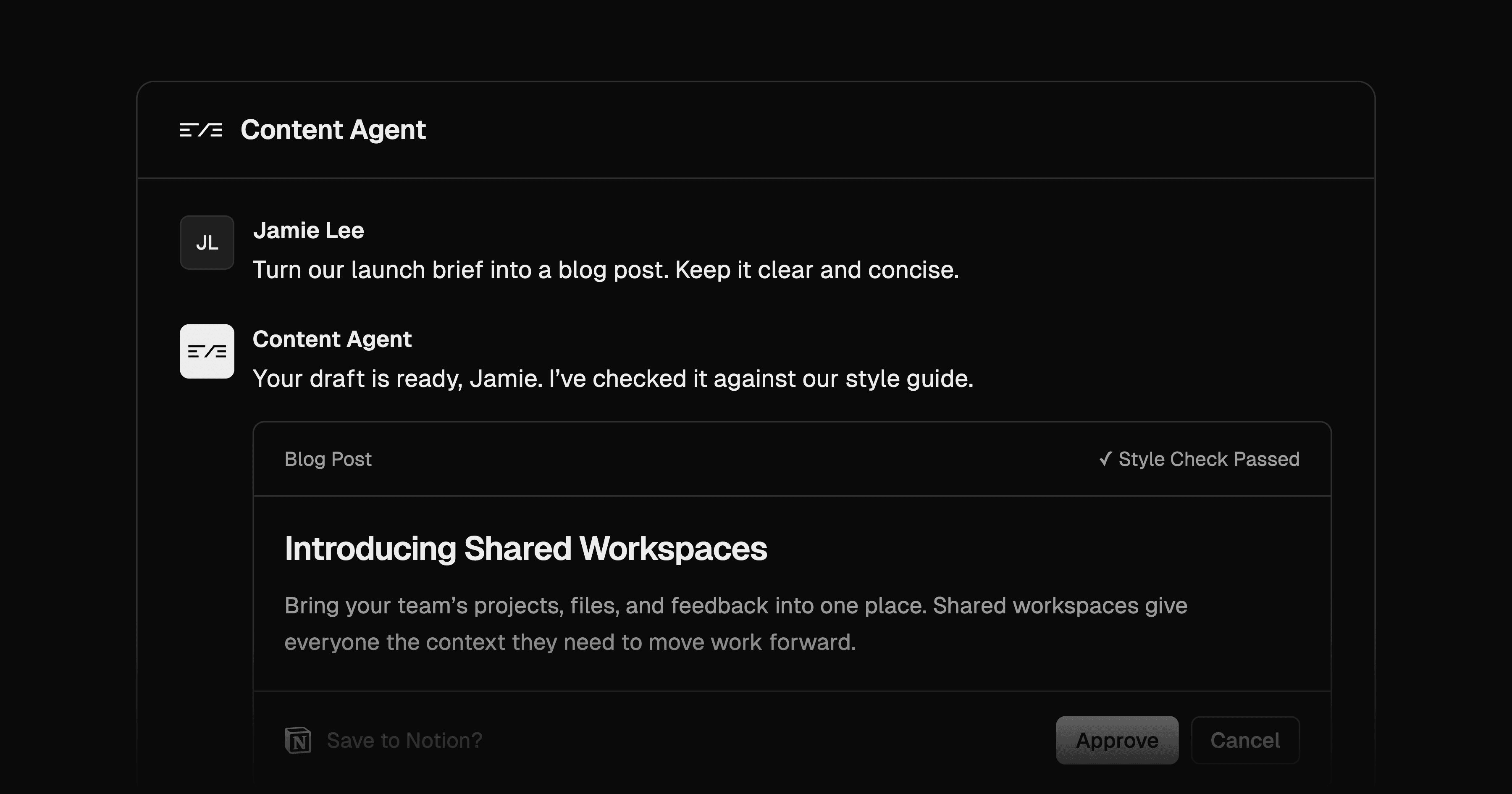
eve Content Agent is a Slack AI agent for writers turning Notion source material into blog posts, social posts, release notes, and newsletters. It applies your format-specific style guidance, checks drafts, and takes revisions in the thread. When the writer approves the piece, page creation pauses for confirmation before saving it to Notion.
Mention the agent with a brief and the format you need, such as a blog post based on product notes in Notion. It reads the source, loads the matching writing skill, and proposes a draft after style checks and review. Follow-up requests stay in the Slack thread so writers can revise in context.
A researcher subagent retrieves outside evidence when the brief needs a fact or source it does not contain. Research and review run in separate sessions with fresh context. The researcher returns cited findings and gaps; the reviewer evaluates the draft against the applicable writing rubric.
Approved pieces become pages in the team's Notion Drafts database. Blob storage also supports exported drafts, images, and attachments. Creating a Notion draft does not post the piece to a public website or social account.
The template gives artificial intelligence agents shared writing rules across formats, while retaining separate guidance for blogs, LinkedIn, X, release notes, and newsletters. You can build AI agents around your editorial standards by changing these skills and the house-wide references.
When choosing the best AI agent for editorial work, look for editable standards and a review process that goes beyond word matching. Here, deterministic banned-word checks handle explicit word lists. A decision model and reviewer assess rules that require judgment, such as format and phrasing.
The eve AI agent framework connects Slack conversations to writing tools and specialist subagents. Vercel Connect authenticates Slack and each writer's Notion connection. Private Blob stores writer preferences and assets; Blob and AI Gateway use the project's OIDC identity. The supplied integrations require no static API keys.
The Content Agent can also be configured as a remote writing specialist for other eve agents, such as Sanity Copilot or a Typefully agent, using OIDC between deployments.
Use the repository's setup instructions to provision Slack, Notion, and private Blob storage. Each writer authorizes Notion through their own account and needs access to the source material and destination Drafts database.
Edit format-specific skills under agent/skills/ and house rules in shared-references/. Run pnpm sync:shared to copy shared rules and regenerate the banned-word lists, reviewer rubric, and supported-format list. New style folders generate format entries; do not edit the registry manually.
Notion page creation has an enforced approval gate. Other Notion tools, including edits, run without that prompt by default. Review the connection's approval list when extending the workflow.
The included skills cover blog posts, LinkedIn and X posts, release notes, and newsletters. Each format has its own writing guidance and specifications. Add another style-skill folder and run the shared-reference sync to support a new format.
The check_style tool matches banned words deterministically and uses a decision model for judgment rules. Uncertain checks or decision-model failures go to the reviewer; otherwise, the drafting instructions call for a separate final review. Passing the word check alone does not establish editorial quality or factual accuracy.
Yes. The agent reads the briefs, product notes, and past posts the writer identifies through their authorized Notion connection. If a claim needs outside evidence, it can request cited research and report missing information. Writers can revise the resulting draft in Slack before saving it.
Yes. The workflow waits for the writer to approve the text, and creating the new page then pauses for an approve-or-deny confirmation. The destination is the team's Drafts database. This page-creation gate does not extend to every Notion editing tool by default.
Notion access follows each signed-in writer's own permissions. Standing preferences persist in that writer's scoped memory and personalize future work within the house rules.

Manage Contentful from Slack with eve. Query synced content, edit drafts, upload assets, and review publication requests.

Coordinate a marketing lead and five specialist agents in Slack, with Notion drafts, Typefully posts, and Resend email campaigns.
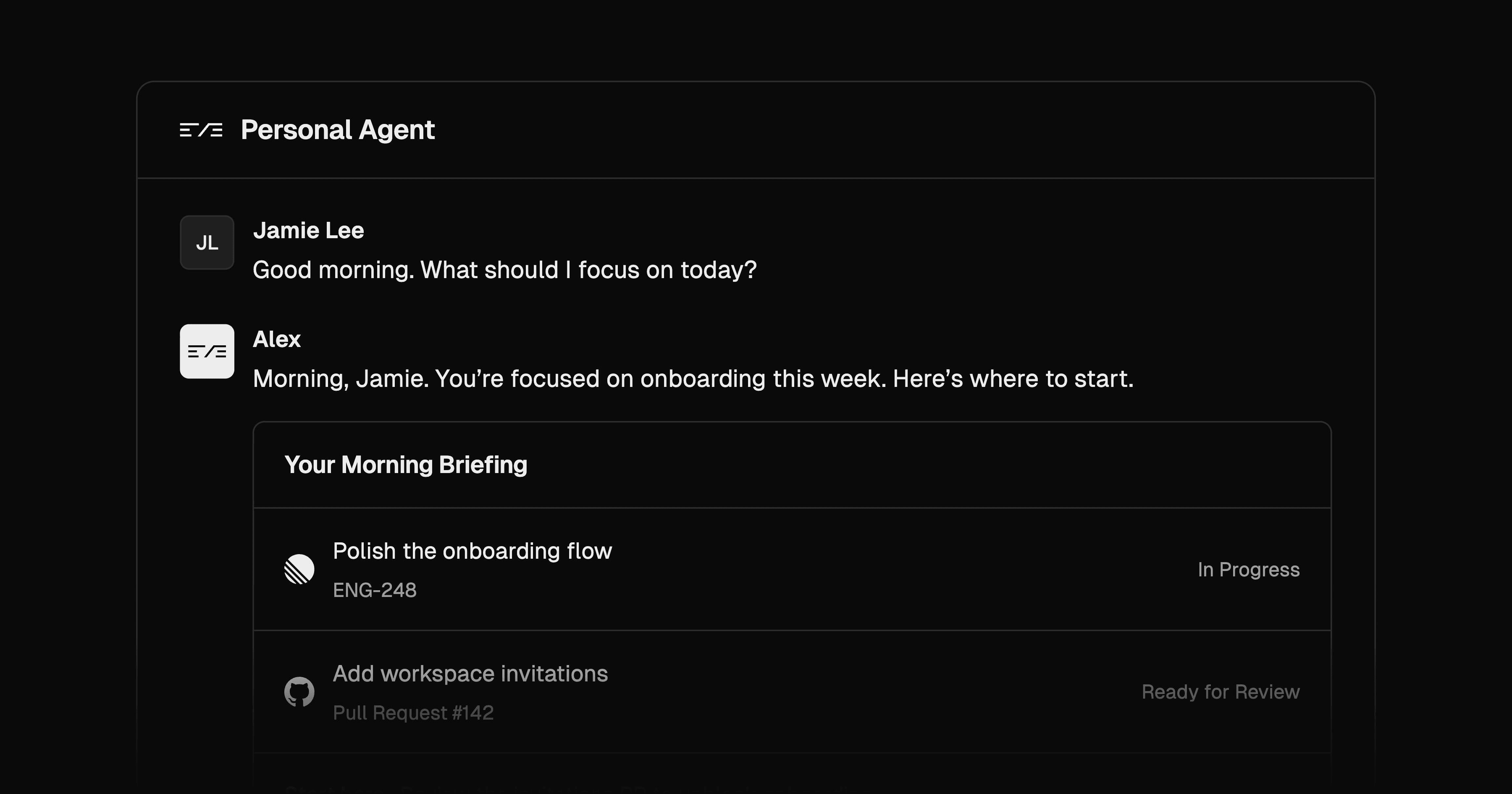
Build a personal eve assistant with persistent web chat, linked Slack identity, optional iMessage, and per-user memory.

