

For a decade, Vercel has shaped how the web is built. Now, we’re doing the same for agents. The companies that win the next decade will build on infrastructure designed for agents from the start, and thousands of people gathered across London, Berlin, New York, Sydney, and San Francisco to do just that at Vercel Ship 2026.

Copy link to headingAgentic infrastructure
Guillermo Rauch (CEO, Vercel) opened Ship SF with a vision for the next era of software and agentic infrastructure: interfaces generated for any task in front of you, agents that reproduce and fix bugs autonomously, and software that takes production context and continuously improves itself.
Production context is what turns software into a loop, because what happens in production drives what gets built next.Guillermo Rauch Founder & CEO @ Vercel

Agentic infrastructure has three parts:
Vercel is where you build and deploy your own apps and agents. We give you every tool you need to build and run apps and agents in production, securely, at scale.
Vercel is where coding agents deploy that software. When you ask your harness where to deploy, you get Vercel, because Vercel is built for the way agents work. We have over 200 CLI commands that your agent can use to operate our entire platform.
Vercel itself is automated by agents. Vercel runs your apps in production, handling traffic, traces, observability, and anomalies. That data gives our agents the context they need to investigate autonomously, and then surface pull requests, not just alerts.

Copy link to headingAgentic Infrastructure is for developers
In his opening keynote, Guillermo pointed to claims that AI would replace developers, then used Vercel's own data to prove them wrong. In the last 12 months:
The number of developers on Vercel has grown 3x
The number of new projects developers ship has doubled
The number of their agent-triggered deployments has increased 28x
"We built Vercel for developers," he said, "because they are the difference between a world full of slop and a world full of software worth using."
Copy link to headingBackends on Vercel
In the next keynote, Malte Ubl (CTO, Vercel) showed how frontends, APIs, backend services, containers, MCP servers, and background workers can all run on Vercel, with support for custom runtimes and system dependencies.
He then announced that Python is now generally available on Vercel. Run FastAPI, Flask, or Django with standard CPython, PyPI dependencies, uv, and pyproject.toml. With Vercel Services, your frontend and backend deploy together, with previews of the full app.
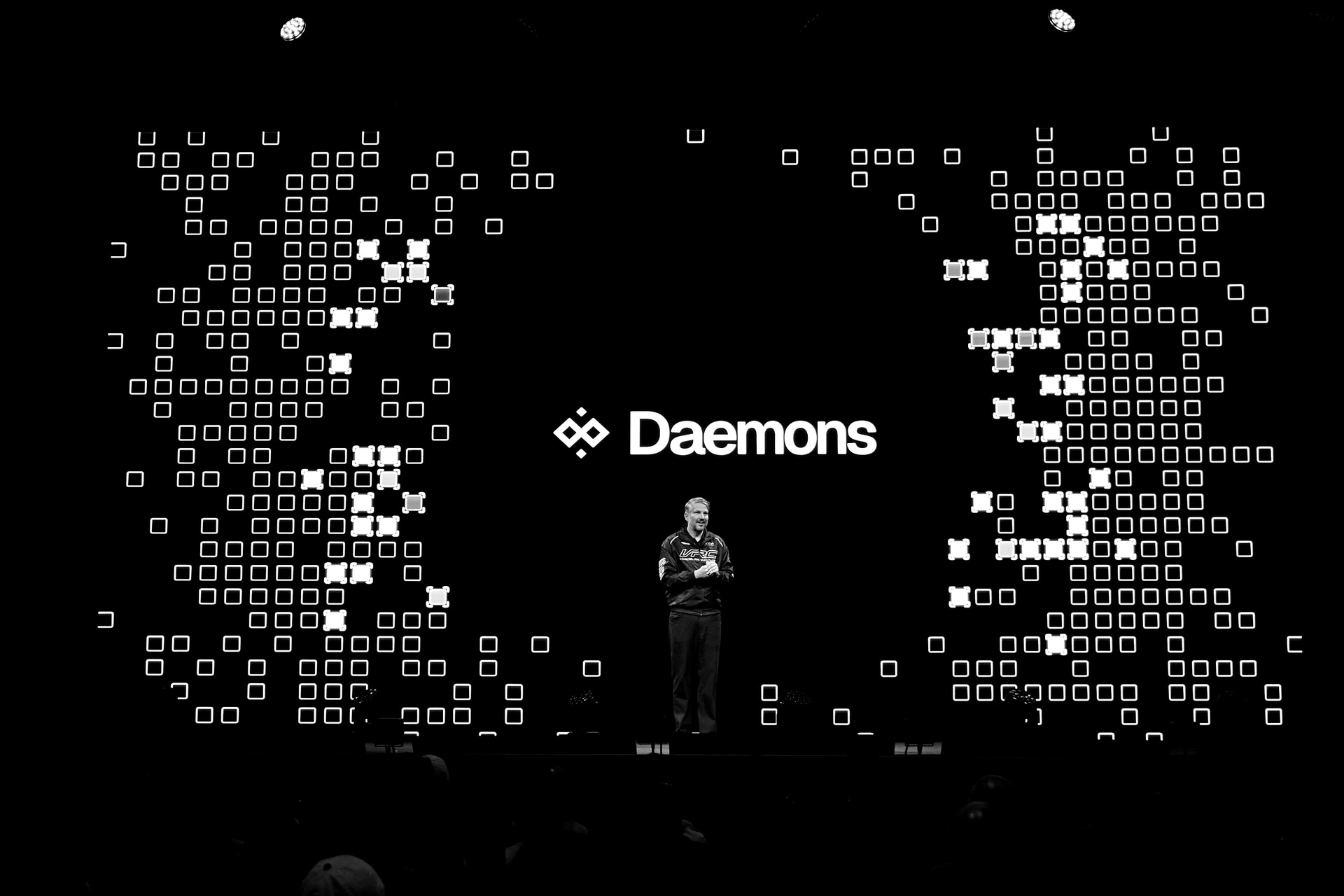
Malte also introduced Vercel Daemons, now in public beta, for continuously running background workers. Deploy your code or container image, set the number of instances, and Vercel keeps them running and replaces them if they fail. Bring Celery, Dramatiq, Temporal workers, or your existing worker processes.
Copy link to headingVercel is for shipping agents
Tomo Occhino (CPO, Vercel) walked through the Agent Stack and its latest updates. The Agent Stack gives you everything you need to build, run, and scale agents in production.

Vercel Drives, now generally available for Sandbox, gives agents persistent workspaces. Code, data, and saved memory survive across runs, so you can change runtimes or compute without rebuilding the workspace.
eve, our open-source framework for building agents, now has persistent memory across sessions, extensions for installing tools and skills, and agent creation and deployment from the Vercel dashboard.
Vercel Connect is generally available, with more than 1,000 connectors. And MCP Events, now in public beta, lets agents respond to events from MCP servers. Connect handles subscriptions, renewals, and secure delivery.
AI Gateway now lets you set budgets for API keys, projects, individuals, and teams. You can also choose US-only inference to keep model processing in the United States, or enable Zero Data Retention so providers don’t retain your prompts or responses. He also introduced Vercel Token Pass, now in early access for Pro teams. Get $80 in GLM 5.3 and Kimi K3 token credit for $30/month, with more models coming soon.
Copy link to headingVercel for enterprise
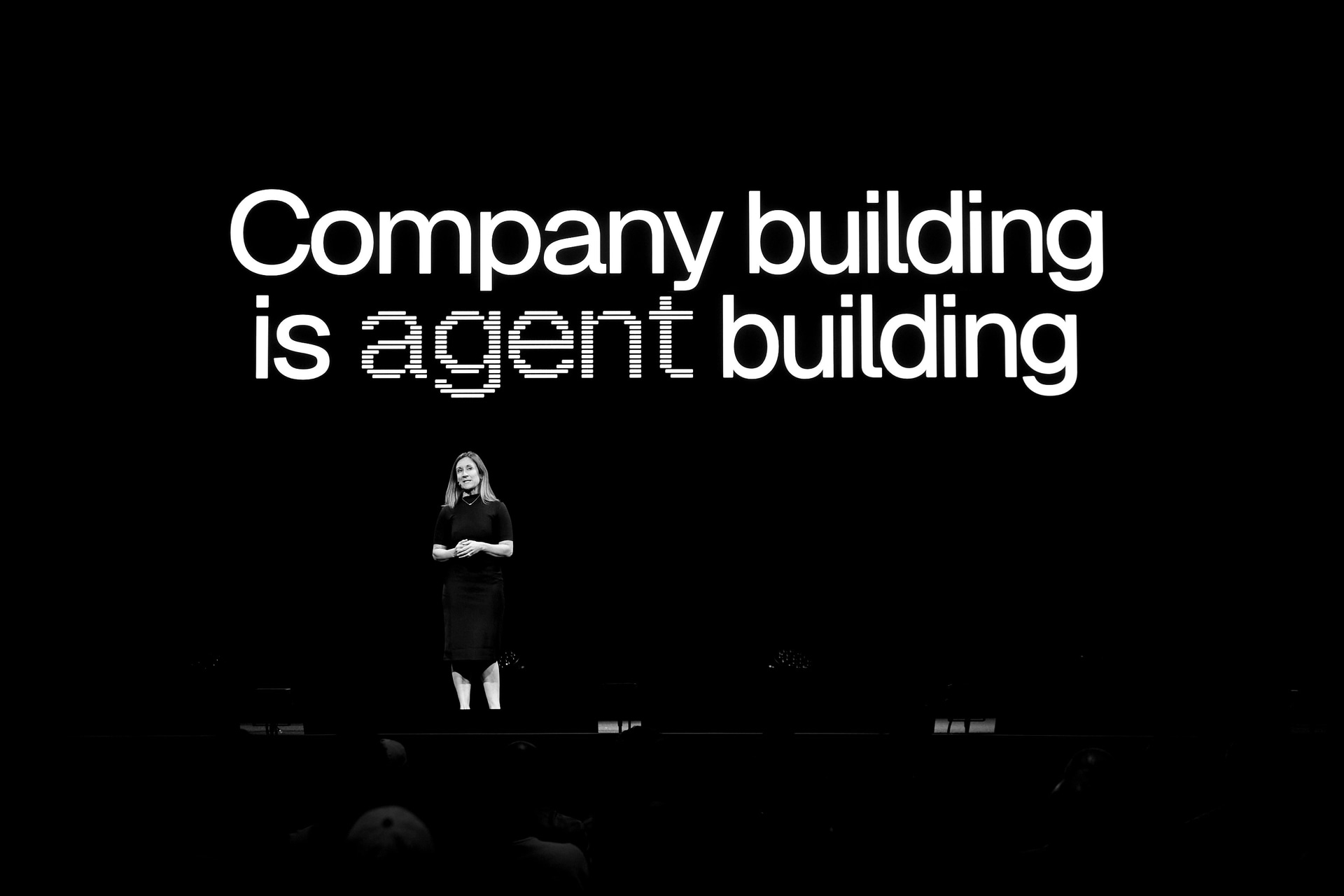
Jeanne Grosser (COO, Vercel) focused on what happens when everyone in a company can build. Engineers, marketers, analysts, and sellers need a common place to deploy, with controls over who can ship, who can access an app, which systems agents can use, and how much they can spend. Company building is now agent building.
Vercel for Enterprise brings those controls together, with two additions announced:
Bring Your Own Cloud on AWS is now generally available. Your application functions run in your own AWS account, within your security and network boundaries.
Enterprise-Managed Authorization for Vercel Connect launched in public beta. With supported services and your identity provider configured, agents can act on employees’ behalf without asking each person to authorize every connection separately.
Copy link to headingShip week in San Francisco
The rest of Ship SF brought more than 2,700 developers, founders, and technical leaders to the Palace of Fine Arts for talks, workshops, startup studio sessions, and agent labs.
Copy link to headingShip day sessions
Assaf Elovic from Ora showed how his team tests whether websites work for agents by sending real agents to sign up, integrate, and pay, then tracing every step. Ora built that fleet on eve and used Is-Agentic to score a live site.
Katelyn Lesse from Anthropic covered the work that starts after an agent is running: keeping it fast and improving its performance across thousands of production sessions with Claude Managed Agents on Vercel.
Prashant Ratanchandani from Meta Superintelligence Labs joined Tomo to discuss building products including Muse on Vercel.
Matt Lewis from Vercel and Mala Neti from Slack explained how we built v, our internal agent, around Vercel’s own data and working practices. Connect and Passport secure its access, and Slack gives employees a place to use it where their work already happens.
Max Peters from Adapta broke down the router behind Brazil’s largest generative AI platform. Built on AI Gateway, it serves 168 models through one integration, selects a model in under 200 milliseconds, and handles more than three million requests a day with automatic failover and per-user budgets.
Sarah Sachs from Notion and Malte Ubl discussed how AI is changing the software teams build and the context agents need to do useful work.
Olawale Oladehin from AWS walked through production patterns for agents on AWS and Vercel, from self-correcting agents to multi-agent orchestration, and how BYOC lets teams run application functions within their own AWS environment.
Philip Miseldine and Sophia Levens from SAP showed how SAP is using v0, eve, and json-render to build generative interfaces, with a focus on consistent design and government requirements.
Aaron Brown and Arty Vohmincevs from Mercor explained how hundreds of employees build internal tools without losing control of access or spending. Apps inherit a managed identity layer, while AI Gateway gives the team visibility into model usage and budgets.
Yury Izrailevsky from ClickHouse traced the company’s path from an open-source analytics database to a platform spanning observability, AI engineering, and managed Postgres. His focus was how open source earns developer trust and helps infrastructure expand into new workloads.
Copy link to headingPanel: Fast AI
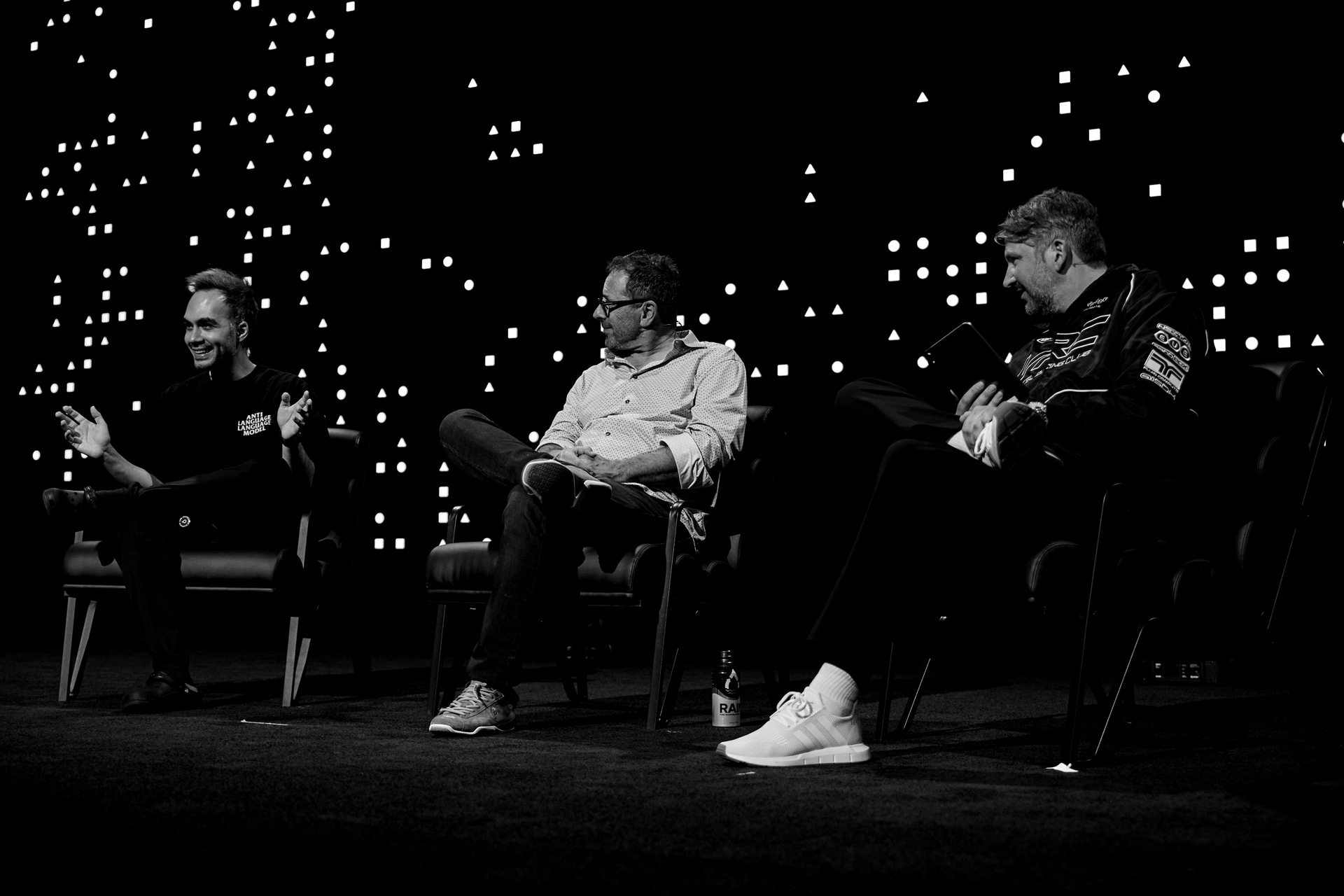
Diogo Almeida, co-founder and CEO of TypeSafe AI, the company behind Jev, and Andrew Feldman, founder and CEO of Cerebras, joined Vercel for a discussion on model reliability, latency, and cost. The panel brought together the model and hardware sides of fast inference, from specialized models to wafer-scale chips.
Copy link to headingClosing fireside with Tobi Lütke
Guillermo sat down with Tobi Lütke, CEO of Shopify, for "The Third Customer," a conversation about building for a world where agents research, compare, and buy products on people’s behalf.
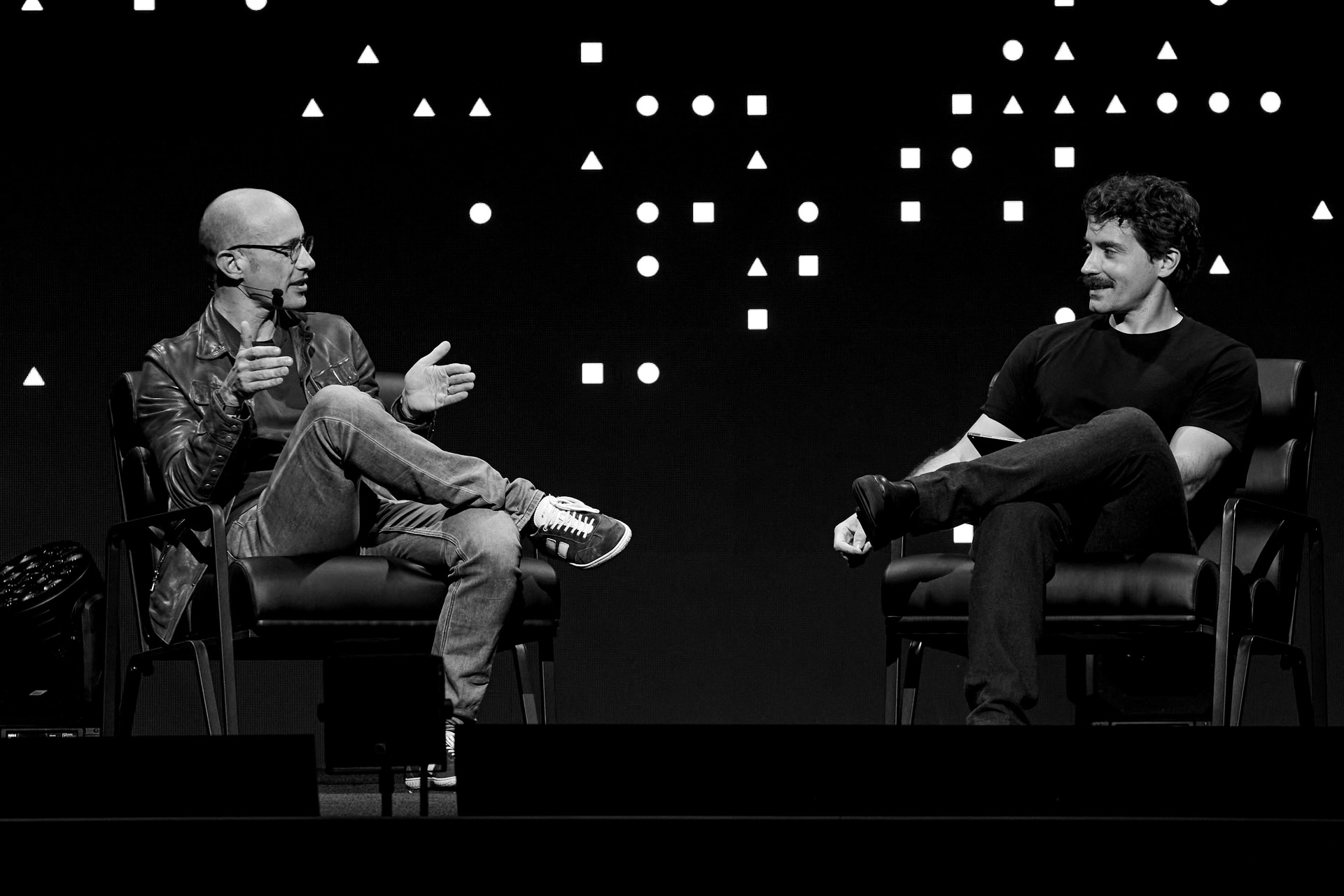
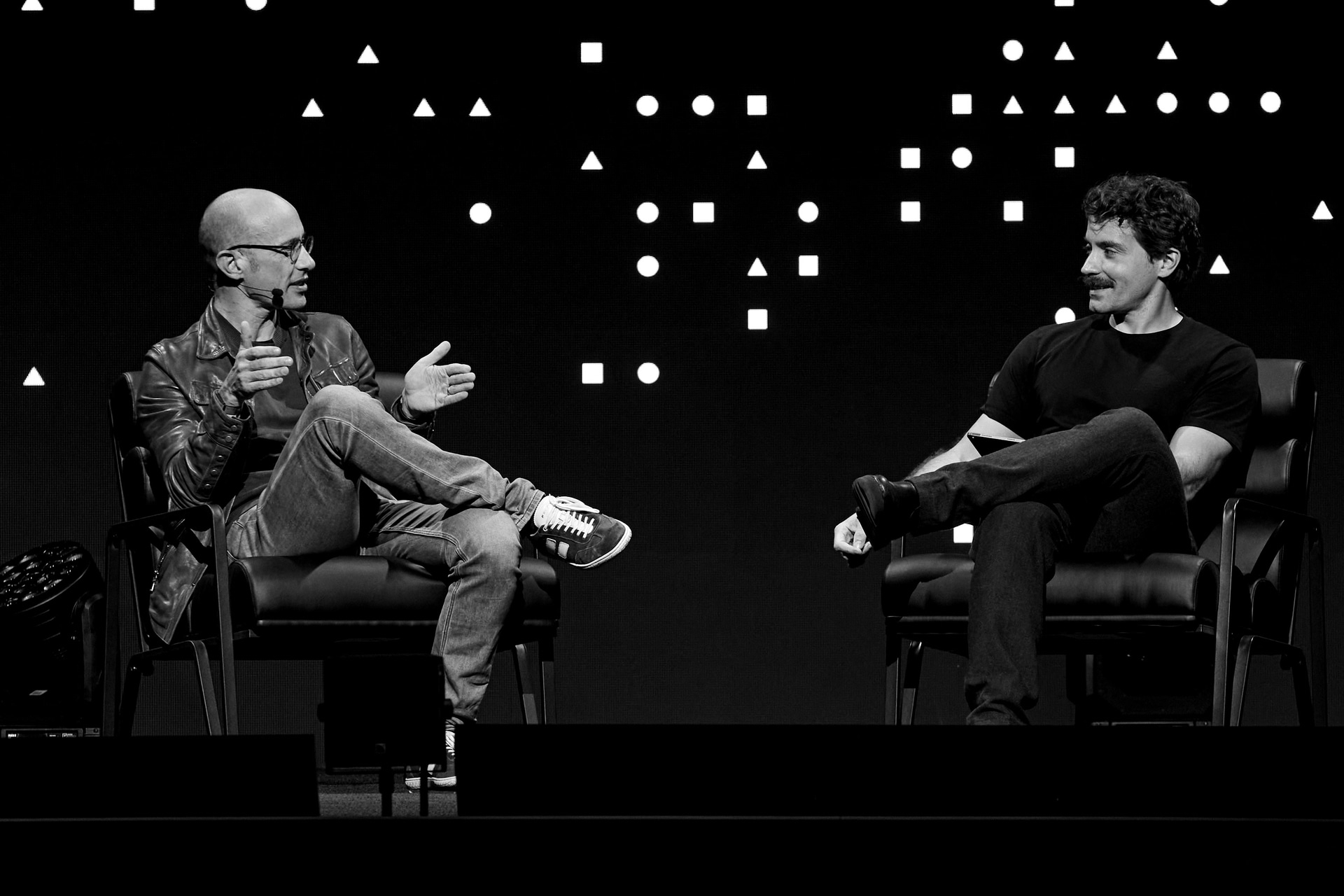
Guillermo Rauch: What excites you about agentic commerce?
Tobi Lütke: It’s early, but the opportunity goes beyond handling purchases people already make. Think about project-based commerce: planning Halloween decorations for your house, or a 3D-printing project with your kids, then ordering everything to arrive before the weekend. Agents can help people follow through on things they otherwise wouldn’t have had time to do.
Guillermo Rauch: Where does that leave traditional storefronts?
Tobi Lütke: There’s still room for exceptional shopping experiences. A distinctive, thoughtful storefront can grow, just as a well-executed boutique can. The businesses that will struggle are the ones offering an undifferentiated experience. Quality and originality still matter.
Guillermo Rauch: How is AI changing engineering at Shopify?
Tobi Lütke: We now think of ourselves as verification engineers, building harnesses and acceptance tests that make changes verifiable. We’re rewriting our storefront renderer from Ruby to Rust, where we can compare the output byte for byte before switching over. We also celebrate simplification and code deletion. At a company hackathon, our internal Slack agent, River, topped the code-deletion leaderboard by a wide margin.
Guillermo Rauch: What should developers in this room go build?
Tobi Lütke: Explore the catalog APIs. They give you access to products from Shopify merchants, so you can build new commerce experiences without first recruiting both sides of a marketplace. Product discovery, recommendations, and curation are real business opportunities. People will pay for tools that help them find what they need.
Copy link to headingShip week San Francisco
Copy link to headingFast Forward hackathon
The day before Ship, Vercel and Meta hosted Fast Forward, with support from Shopify and Neon Postgres. Builders worked across three tracks: agents that keep working after you step away, multimodal apps, and immersive VR experiences.
Copy link to headingFounder dinners, executive conversations, and Partner Day
Founders, partners, and enterprise leaders gathered throughout the week for dinners, Partner Day, and conversations on building with AI. The executive program focused on what happens when anyone with an idea can build, and how do you govern what ships.
Copy link to headingShip 2026 in London
Copy link to headingShip day keynotes
Tomo introduced the Agent Stack, bringing model access, durable execution, sandboxed compute, and messaging together for production agents.
Hedi launched Vercel Connect in public preview, giving agents scoped access to external tools and data without storing long-lived provider credentials in environment variables.
Shar demoed eve, our open-source agent framework. Each agent lives in a directory, with instructions in Markdown and tools in TypeScript. Durable execution, approvals, subagents, and evals are already wired in.
Jeanne introduced Vercel for Enterprise Apps and Agents, including Vercel Passport in public beta for protecting internal apps with your identity provider, and Bring Your Own Cloud on AWS in private beta.

Copy link to headingShip week London
Our first Ship outside the U.S. ran five days of events leading into the keynote, and an ice cream truck spent the week working its way across the city.

Copy link to headingBuilt in London hackathon
Two hundred builders shipped agents on Codex and Vercel in a hackathon with OpenAI. Three projects stood out. Stella hunts down unclaimed grants for London SMBs, Oscar is a co-pilot that sharpens your prompts before you send them to a model, and Phone Jail blocks distractions and roasts you when you reach for your phone anyway.
Copy link to headingMedia, Founder, VC, and CTO dinners
Reporters traded story ideas over a media dinner. Twelve founders talked through the future of AI in EMEA at a VC dinner. And a dozen CTOs from teams including Marks & Spencer and Currys went off the record on what it takes to build and scale agents in the enterprise.
Copy link to headingDay Zero builder night
Day Zero, the day before the keynote, turned into a 400-person builder night. Enterprise teams Mentimeter, Okta, and MongoDB joined Vercel in a packed room alongside partners DeepMind, ElevenLabs, and Cursor.
Copy link to headingAI Social Club
A 160-deep waitlist formed for Malte's talk A New Stack for a New Era of Software, followed by Guillermo and Deliveroo's Will Shu's chat on building the agentic enterprise.
Copy link to headingShip day sessions
André Balleyguier from Anthropic showed Claude Managed Agents on Vercel, where Anthropic hosts the agent loop while every command the agent runs executes inside a Vercel Sandbox you own, keeping its filesystem, processes, and network egress in your environment.
Tomas Jansson from Currys/Elkjøp showed how his team evolved a Nordic retailer's ecommerce stack from storefronts toward shopping agents in three phases, anchored by a Next.js migration that cut time to first byte by 40%. The end state is one where customer intent replaces navigation.
Matan Kushner from Vercel broke down how Vertex, Vercel's support agent, now automates 91% of support tickets and saves 5,000 engineer-hours a month without degrading as its context grows.
Jas Sagoo and Sam Bellen from Auth0 made the case that getting an agent into production depends more on identity than on model quality. They demoed four standards-based identity patterns on the Vercel AI SDK, Token Vault, CIBA approvals, agents as first-class principals, and on-behalf-of delegation, so every action is scoped and traces back to a human decision instead of a shared API key.
Abhi Sivasailam from Vercel went deep into d0, Vercel's internal data agent built on eve, which runs analyses in a sandbox and now gets 45% of its questions from other agents, rather than people.
Romain Huet from OpenAI showed developers how to ship faster by delegating whole tasks to Codex Cloud Agents on Vercel, and made the case that as agents become users of your product, you design for agent experience with scoped API keys, markdown docs, and plugins.
Michał Pierzchała from Callstack demoed a QA agent that runs mobile apps on real devices, explores user flows on its own, and posts screenshots, recordings, and logs to pull requests on every PR.
Alex Holt from ElevenLabs paired the ElevenLabs Speech Engine with the AI SDK to build a voice agent that can reply in under a second, take interruptions mid-sentence, and switch language mid-conversation.
Malavika Balachandran Tadeusz from Vercel showed the mechanics of how software can ship itself, extending the agent loop past development into testing, observability, and experimentation with primitives like Vercel Flags and Skills.
Copy link to headingPanel: Agents in production
Jeanne Grosser, COO of Vercel, moderated a panel on taking agentic workloads from prototype to production with some of the EU's top CTOs and AI leaders from frontier labs. A few highlights:

Arthur Viegers (Cursor): Autonomy should track risk, and the better an agent can assess the risk of a change, the more you can let it run on its own. Shopify and Amplitude already auto-review and merge 60-70% of low-risk PRs with no developer time, while a two-line change to authentication still goes to a human.
André Balleyguier (Anthropic): To decide what an agent can do on its own, judge each action by how reversible it is and how large its blast radius is, then contain it accordingly, for example inside a self-hosted sandbox. As you grant more autonomy, observability and evals become the things that keep it safe.
Ryan den Rooijen (Currys): The predicted death of stores never arrived, and Currys leads its markets by betting on humans. The open question for agentic commerce is which shopping journeys customers want an agent to handle and which they still want a person for.
Nicolas Le Pallec (AKQA): AI-native customer experience replaces navigation with intent. Reaching it takes three layers: a way to capture true customer intent, a brand brain that stores brand and product data for AI systems to retrieve, and generative UI that composes pages on the fly instead of serving static ones.
Copy link to headingFireside chat with Harry Stebbings
The day ended with a fireside chat between Guillermo and Harry Stebbings from 20VC. Below are excerpts from the lightning round at the end of the discussion.

Guillermo Rauch: What are the attributes of a founder you want to back?
Harry Stebbings: The profile has changed completely. It used to be a sales-led CEO who could fundraise and grow customers, where personality and sales carried the company. Now I want an engineering- and product-led founder.
Guillermo Rauch: Can you teach someone to become a voice for their industry?
Harry Stebbings: You can, but it's hard. You have to do it for six months straight. It's a muscle you build, and you have to commit to it every day and every hour.
Guillermo Rauch: When anyone can produce content and software, how do you stand out?
Harry Stebbings: You come up with a new format, a new intro, a new way to tell the story and shape the work. The content itself has shifted too. We used to do shows about leadership and hiring, and nobody cares about that anymore. What lands now is a founder and AI. Those are the two things.
Copy link to headingShip 2026 in Berlin
The Berlin event opened at the Old Mint, “Alte Münze”, where coins were once hammered by hand, before machine automation took over. It is also where the JavaScript logo was born, and where Guillermo Rauch (CEO) met Malte Ubl (CTO) for the first time at JSConf EU.
Software is moving the same way, from hand to machine, and Vercel is paving the way for building in the agentic era. Over 500 people gathered from across Germany to do just that at Ship 2026 in Berlin.

Copy link to headingShip day sessions
Suyog Rao from Vercel announced AI SDK 7. The AI SDK is now downloaded over 16 million times a week. Version 7 turns it into a toolkit for building and running agents that reason, call tools, run across many turns, and work across files and sandboxes, all behind one provider-agnostic interface with no lock-in.
Philip Miseldine from SAP showed how the company rebuilt its design system to be composable, so people and agents assemble interfaces from the same parts, with v0 running across its build, deliver, and decide stages.
Building with AI SDK 7 brought three speakers on stage. Lars Grammel, the primary engineer behind the update, went deep on the release, with the new harness layer and generation beyond text as the headline additions. Carsten Høyer from AKQA demoed the Starbucks ChatGPT app as a "generative store" that composes branded results from Starbucks' own products and visual identity, flipping the funnel so customers pull the brand into their conversation instead of visiting its site. Stephen Batifol from Black Forest Labs showed where the Flux image models fit in an agentic stack: sub-second generation and editing today, heading toward real-time generation and world models.
Arthur Viegers from Cursor showed how coding agents move from autocomplete to working across an entire codebase on their own.

Copy link to headingPanel: CTOs on AI and growth
Chris Williams (Head of Forward Deployed Engineering, Vercel) moderated a CTO panel on building and scaling as the cost of creation trends toward zero. A few highlights:
Sven Rosemann (Flaconi): AI won't fix a broken business model, so the work is still operational excellence. He compares ecommerce to a decathlon, you win by being top-tier across every discipline at once. What's changing is discovery, which is moving into chat, so Flaconi is investing in the data foundation that makes its catalog retrievable by agents, betting that buying and checkout eventually happen there too.
Tjaž Silovsek (Astra AI): venture funding is no longer a prerequisite. For many ideas, you ship, find distribution, and iterate instead. Astra reached 10 million users and $25M ARR fully bootstrapped, with a small team kept fast by a stable foundation and agents given a lot of autonomy while kept as safe as possible.

Copy link to headingDACH Partner Award
Vercel presented its first-ever DACH Partner Award to Valtech, for the exceptional impact and delivery, strategic thinking and team enablement it brought to clients. The presentation also thanked the event's sponsors: Auth0, Storyblok, Cursor, SAP, Accenture Song, Blazity, and JVM.
Copy link to headingShip 2026 in New York
Copy link to headingShip week New York
Ship NYC was the most in-demand of any stop yet with over 3,000 people registered. Founders, partners, leaders, and builders gathered for five days of hackathons, executive receptions, workshops, and more, with Ship day at the center.

Copy link to headingBuilt in NYC
The week opened with Built in NYC, a hackathon co-hosted by Vercel and Anthropic alongside Sentry, Auth0, Resend, and Supabase. More than one hundred people joined us for an afternoon of building and demoing agents on Vercel.
Copy link to headingVC, CTO, and VIP dinners
Jeanne DeWitt Grosser and Nick Bogaty gathered the leaders shaping AI-native development at a VIP reception. Founders traded notes on the future of agents over a VC dinner. At Per Se, Guillermo, Jeanne, Tom, and Malte took CTOs and CIOs for a closed-door conversation on where traditional architectures start to break in the agent era.
Copy link to headingAI Social Club
AI executives and senior leaders assembled at Moss for a fireside chat led by Tom Occhino with William Anderson (CTO, Bloomberg Media), Jeremy Bunting (VP Engineering, Serhant), and Ali Patterson (Staff Design Program Manager, DoorDash). They discussed what's working, what's not, and where agentic infrastructure is driving meaningful outcomes for enterprises.

Copy link to headingShip day sessions
Ryan Coyne from SERHANT. walked through S.MPLE, a real estate agent built on Vercel that drove a 144% increase in commission income in its first full year.
Brandon Bloom from Brex gave its expense-audit agent a
bash-only shell so it manages its own context instead of drowning in tool responses, cutting tool calls and token usage by 75%.Ari Schapiro and Chris Sev from Auth0 demoed how to give an agent scoped, revocable power instead of a master key, with standards-based identity patterns like Token Vault and out-of-band human approval, live on the Vercel AI SDK.
Jenny Wang from Alta and Maxwell Osborne from PUBLIC SCHOOL NYC showed how Alta's AI styling app runs on Vercel, generating an avatar a second and 250M+ outfits so far. Together they built a custom version for PUBLIC SCHOOL's New York Fashion Week relaunch.
Charlton Roberts from FLORA showed three creative-production workflows running on Vercel Sandboxes. They collapsed 18 bespoke tools into two by letting the agent run and write its own code against the AI SDK.
Prasad Wangikar from Stripe broke down how to give agents spending power and capture agent-driven revenue using emerging protocols like MCP, UCP, and x402 for the machine-to-machine economy.
Shaown Nandi from AWS discussed how Vercel and AWS work together, with native AWS databases and OpenSearch available in the Marketplace and models through the AI Gateway, proven out by The Weather Company's 350M+ users.

Copy link to headingPanel: Internal apps and agents in production
Jeanne moderated a panel on building and deploying internal agents with technical leaders on who should build, what governance looks like, and how teams can move from experiment to production. A few highlights:
Andy Martin (MJH Life Sciences): The way to win the shadow-IT battle is to constrain the stack and stay permissive inside it. His AI Accelerator trains non-engineers, marketers, and early-career staff to build internal apps on a deliberately tight stack of Claude Code, Vercel, and GitHub, with ephemeral preview deployments as the guardrail. As he put it, "If it becomes the Department of No, you will have people working around you."
Greg Chan (SERHANT): The cleanest way to structure agents is to mirror a human software team. Product-manager agents write requirements in Linear, engineering agents generate specs, and build-and-QA agents take it from there, so engineers become leads running multiple streams. To keep output safe, SERHANT runs evals for hallucination and compliance, including a custom model for Fair Housing Act rules.
Victor Oliveros (ZoomInfo): Embedding v0 inside your own product lets your customers build their own workflows. At ZoomInfo, 40,000+ of them do, turning the voice of the customer into a pull request. Agents analyze recorded calls and open PRs, so the product team decides what ships instead of synthesizing feedback. They pair Vercel's deployment guardrails with ZoomInfo's context-graph permissions, so each agent only touches data its user can see.

Copy link to headingFireside chat: Building agentic storefronts
Tom sat down with Vanessa Lee (VP of Product, Shopify) to discuss where commerce and software go next. Below are highlights:

Tom Occhino: Vercel and Shopify have shipped something new together. What is it?
Vanessa Lee: We boiled Hydrogen down to the parts of commerce that are genuinely hard (analytics, optimistic cart UI, variants) and made them work with any framework. So if you're on Next.js on Vercel, Shopify's commerce primitives now drop in, with an integration in the Vercel Marketplace. Read more here.
Tom Occhino: You also opened the Catalog API. What does it unlock?
Vanessa Lee: There's never been a good open product-search API. We have billions of products and millions of merchants, so we built one, the only widespread shopping API, made for commerce. It lets anyone embed shopping anywhere. Someone in my Toronto running group used v0 to build a site with a leaderboard and the weather, and the Catalog API surfaced products from nearby stores. Commerce stops being a destination and becomes part of what you build.
Tom Occhino: Shopify and Vercel both obsess over reducing friction. Why does that matter so much?
Vanessa Lee: Early on, Tobi's insight was that tools shape the market. The TAM was never limited by demand, it was limited by how hard the tools were to use. Make building easier and more people build. There's resourcefulness in the general population that's just untapped, and lowering the friction is what releases it.
Copy link to headingClosing keynote with Ivan Zhao
We closed out Ship in New York with a conversation between Guillermo Rauch and Ivan Zhao (CEO, Notion). A few highlights:

Guillermo Rauch: You've started telling designers to design for the API first and the UI last. Why?
Ivan Zhao: Because your next customer isn't only a human, it's a human and an agent, and agents are blind. They don't see your interface, they read your semantics and your API. The most enduring software has always been a data structure anyway, the spreadsheet, or our block, a data structure that happens to have a UI. So design the structure and the meaning first, the interface last. A great tool for developers turns out to be a great tool for agents.
Guillermo Rauch: Vercel and Notion are both aggressively model-agnostic, Switzerland in the model wars. Why?
Ivan Zhao: The models leapfrog each other every few weeks, so picking a side is a losing game. We route automatically by the intelligence a task needs, frontier models for coding, smaller and faster ones for support and summarization. What excites me most is that as more use cases stop needing frontier intelligence, you can shape smaller models to your product and win back speed and cost. And speed creates discontinuities, a model five times faster can change the kind of interface you'd even design.
Guillermo Rauch: When a billion knowledge workers are agents, how does that reshape us?
Ivan Zhao: We can't fully see it, and that's the point. First-order effects are easy, the iPhone was an iPod plus a phone plus a browser. The second-order effects are the ones that surprise you, like what social media did to teenagers. We shape our tools, and then our tools shape us. With software that can think, the second-order effects are the ones we won't predict.
Guillermo Rauch: Taste or velocity, keep one.
Ivan Zhao: Taste. It's the distillation of wisdom from a lot of shots on goal.
Copy link to headingShip 2026 in Sydney
The Sydney event opened at Machine Hall, a 1930s electrical substation that ran the city's trams and wharves for half a century. Over 200 people gathered there to build for the agentic era at Ship Sydney.

Copy link to headingShip week Sydney
The week kicked off with the AI SYD meetup, where developers, AI engineers, and the Sydney technical community joined for an evening of lightning talks and networking. At the AI Social Club, senior leaders gathered at Shell House for a talk from Malte Ubl and a fireside with Suyog Rao and David Hyman (Founder, monō ai) on how agentic infrastructure is driving meaningful outcomes for enterprises.
Copy link to headingShip day sessions
Belen Garcia Fava and Vivek Katial from Heidi Health showed how their team ships fast in a regulated space with agents and Vercel, and made the case that trust is engineered, not granted.
Robin Yoong from Cursor created an eve agent by voice alone. Three models coded in parallel, and a spoken approval shipped it to Vercel.
Nonny Bell (Startup Manager APAC, Vercel) moderated a panel with Matthew Blode (AI Engineer, Linktree), Aarush Issar (GM AI Engineering, Auto & General Australia), and Leonardo Borges (Chief Engineer Gen AI, CommBank) on how their teams are adopting AI agents in production.
JJ Lecocq (Sales Director AUNZ, Vercel) led a discussion on how organizations are reshaping people, culture, and structure for AI.

Copy link to headingShip what's next
Thanks for joining us for Ship 2026 in London, Berlin, New York, Sydney, and San Francisco. We'll see you in May for Ship 2027.
